Computer vision syndrome

Computer vision syndrome

Computer vision syndrome
Computer vision syndrome is a group of symptoms that occur as a result of long-term work in front of a computer. Initially, it is manifested by eye fatigue, heaviness of the eyelids, frequent blinking. Sometimes a feeling of sand or blurred vision may occur. If no measures are taken in time, the condition may worsen. Hypersensitivity to light, lacrimation and other phenomena that disrupt the normal functioning of the visual organ may develop. In some cases, computer vision syndrome is manifested by pain in the head, discomfort in the neck, shoulders, back, and unpleasant sensations during eye movements.
Visual disturbances that may occur during computer vision syndrome, as a rule, do not lead to serious eye diseases, but significantly worsen the quality of life. In order to avoid this, it is necessary to regulate the load on the eyes in front of the computer, as well as choose appropriate glasses and contact lenses.

Causes of computer vision syndrome

The development of the syndrome is not associated with monitor radiation. The essence of the problem lies in the perception of the image from the screen by the eye. For example, in a book, the image does not glow on its own, does not flicker, so reading does not require much effort on the eyes. But when working with a computer, the image is illuminated and consists of a set of many small dots, pixels, which are constantly flickering. Even if this flickering is not visually noticeable, the eyes still get more tired from looking at the screen than from reading a book or magazine.

Computer vision syndrome can often develop in the following cases:

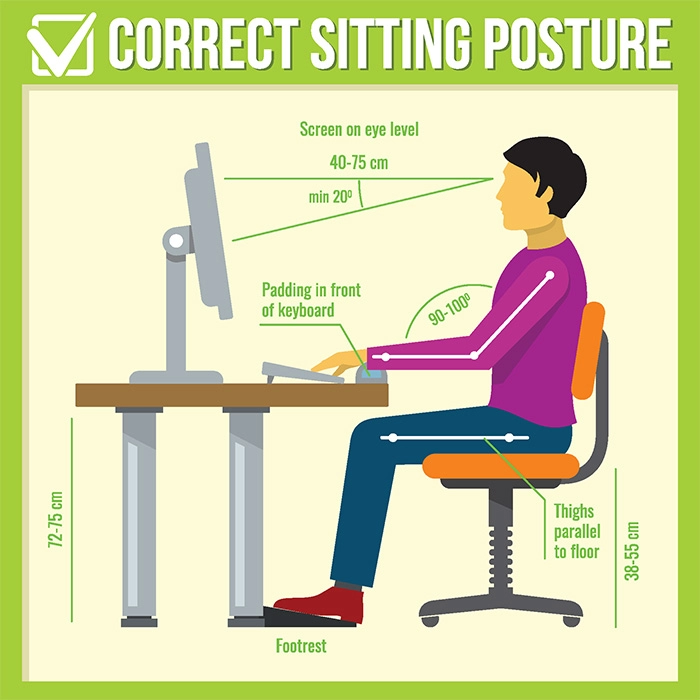
•Incorrect organization of the office: a greater or lesser distance from the monitor than the norm, high screen brightness, the need to constantly change your gaze from the monitor to the papers and vice versa, etc.

•Long and continuous work in front of the computer - when we look at the monitor, we unconsciously blink less and, consequently, the eyes become less moistened, which in turn leads to a violation of the quality of the tear film. Thus, the protective and lubricating functions of tears suffer, which contributes to the development of dry eye syndrome, which is accompanied by tearing, tearing, and discomfort in almost 50% of office workers.

•The presence of monitor glare - any light source, falling on the screen, increases eye strain.
Computer vision syndrome

How to deal with monitor glare

To get rid of glare and thus reduce strain, first of all, you should place the computer monitor so that the windows are located to the side. If this is not possible, then you should close the curtains so that excess light does not fall on the screen. Bright ceiling lights should be turned off or replaced with lamps of lower intensity. The desk light should be positioned so that it does not shine directly on the screen and into the eyes.
In addition, the use of computer glasses with special anti-glare coating gives good results.
The brightness of the computer screen should be adjusted - it should not be too bright, but not dim.
The eye perceives information more easily if high contrast is set in the monitor settings. The color of the screen is also important - it is desirable to work on a black and white or light yellowish background.
The brightness of the general lighting in the room should match the brightness of the monitor. All this reduces the likelihood of developing computer vision syndrome.
It is recommended to take short breaks from work, every 10-15 minutes. During this time, you can focus your eyes on objects outside the window or in the distance if there is no window nearby. The eyes should be given a rest at least once an hour. It is advisable to perform exercises that relieve eye fatigue.

Why is it important to sit correctly

The visual image is formed in the occipital lobe of the brain. The full blood supply of these sections depends on the health of the vessels of the cervical region. Incorrect position of the body, head and neck contribute to muscle spasm and tension, which in turn leads to compression of the carotid and vertebral arteries and a decrease in oxygen supply. This condition leads to weakness and dizziness, fatigue. Physiotherapy measures reduce the risk of developing complications and prevent the occurrence of computer vision syndrome.
Prevention is always preferable to treatment, so you should properly organize the workspace and computer monitor so that the eyes do not suffer. It is recommended to use moisturizing drops, eat foods rich in vitamins.
Any eye diseases, including computer vision syndrome, require consultation with a highly qualified specialist who will select the safest and most effective treatment tactics.

What is an AMH test?
15 December 2025
An AMH test measures the level of anti-müllerian hormone in your blood. This hormone is produced by the small follicles in your ovaries and reflects the number of eggs you have — your ovarian reserve. Higher AMH levels usually suggest more available eggs, while lower levels indicate fewer remaining eggs or a naturally declining reserve with age. Although AMH provides valuable insight into egg quantity, it cannot predict how easily you can get pregnant, whether fertility treatment will work or when menopause will begin. Healthcare providers use AMH testing to get a clearer picture of reproductive health. It helps determine if your ovaries are aging faster than expected, estimate how well you may respond to fertility medications and prepare for treatments such as IVF, where multiple mature eggs are needed. AMH can also be useful in identifying or tracking certain ovarian tumors, including granulosa cell tumors. AMH levels rise through adolescence, peak in your mid-20s and gradually decrease as you age. Typical levels range from 1.0 to 3.0 ng/mL, while anything below 1.0 is considered low. Levels may vary slightly depending on the laboratory equipment used. What an AMH test is used for: • Evaluating ovarian reserve, reproductive aging and potential response to fertility treatments like IVF. • Helping diagnose or monitor ovarian masses, especially granulosa cell tumors. The AMH test is a simple blood test that can be performed at any point in the menstrual cycle because AMH stays relatively stable throughout the month. You don’t need to prepare beforehand. If your sample is processed by a laboratory, results typically return within a few days. While at-home AMH kits are available, a specialist should always interpret the results. Fertility is influenced by many factors, including age, ovulation patterns, sperm quality, blocked fallopian tubes, pelvic conditions and uterine abnormalities — none of which AMH can measure. What an AMH test cannot tell you: • Your ability to conceive naturally, your exact fertility potential or the age you will reach menopause. • Other major fertility factors such as sperm count, ovulatory problems, fallopian tube blockage, endometriosis or uterine fibroids. In summary, an AMH test offers valuable information about your ovarian reserve, but it is only one part of the bigger fertility picture. Understanding your results with a qualified specialist ensures you get accurate guidance and a personalized plan for pregnancy or treatment options.
What Is Bradycardia?
11 December 2025
Bradycardia means your heart beats slower than normal — fewer than 60 beats per minute. For many people, especially athletes or those who are asleep, this can be completely normal. But sometimes a low heart rate signals a problem with the heart’s electrical system and may prevent the body from getting enough oxygen-rich blood. Many people with bradycardia feel no symptoms at all. Others may experience dizziness, fainting, unusual fatigue, shortness of breath or trouble concentrating. These symptoms appear when the heart isn’t pumping enough blood to meet the body’s needs. Even if you feel well, it’s important to talk to a healthcare provider if you notice that your heart rate is consistently lower than usual. Common causes include: • Age-related changes in the heart’s electrical pathways, electrolyte imbalances, underactive thyroid, sleep apnea and infections such as Lyme disease. • Heart conditions like cardiomyopathy or previous heart attacks, as well as certain medications including beta-blockers and calcium channel blockers. To diagnose bradycardia, doctors typically start with an electrocardiogram (ECG), though additional monitoring may be needed because slow heart rate episodes can come and go. Blood tests, echocardiograms, stress tests and sleep studies help identify underlying problems. Treatment depends on the cause. Sometimes adjusting medications or treating thyroid issues, infections or other conditions is enough to correct the heart rate. In more serious cases where the heart’s electrical system isn’t functioning properly, a pacemaker may be needed. If a person is healthy and has no symptoms — as is often the case with athletes — treatment might not be necessary. Seek emergency care if: • You have a low heart rate with chest pain, severe dizziness, difficulty breathing or fainting. • Your heart rate drops below 40 beats per minute and this isn’t normal for you. Bradycardia is often treatable and sometimes temporary. With early diagnosis and proper care, most people have a good outlook.
Benefits of a house call doctor
03 December 2025
House call medicine is returning in a big way, reshaping how people receive care in today’s fast-paced world. What once seemed like a tradition of the past is now a modern solution for patients who value comfort, convenience, and meaningful connections with their healthcare providers. As lifestyles shift, populations age, and technology continues to evolve, in-home healthcare has become a practical and patient-centered alternative to traditional clinic visits. Care that comes to you The most obvious advantage of a house call doctor is simple: you don’t have to go anywhere. For individuals with limited mobility, chronic conditions, busy schedules, or post-operative needs, traveling to a clinic can be physically uncomfortable and emotionally draining. A home visit eliminates transportation challenges entirely, allowing the patient to stay in a familiar space while receiving professional care.Even for those who are otherwise healthy, having medical services brought to the doorstep adds a layer of ease that traditional appointments rarely offer. A more personal approach House call visits naturally allow for deeper, unhurried interactions. Without the rush of a clinic environment, providers can listen more closely, ask more thoughtful questions, and observe subtle details that might otherwise be missed. This extra time helps build a stronger relationship based on trust and understanding. Patients often find it easier to express concerns openly when they feel relaxed and unpressured—something that’s harder to achieve during quick, crowded office visits. Seeing the whole picture When care happens at home, providers gain a clearer understanding of a patient’s daily life. They can observe environmental factors that influence health—sleep setups, mobility challenges, fall risks, medication storage, dietary patterns, or stressors within the household. These small details often provide big insights. Better management of chronic conditions Chronic conditions such as heart disease, diabetes, COPD, and dementia often benefit greatly from consistent in-home oversight. Regular visits help keep symptoms under control, monitor progress, and adjust treatments before problems worsen. For many patients, this ongoing support means fewer complications and a stronger sense of stability. Comfort, privacy, and peace of mind Many patients feel anxious in clinical settings. Exams, bright lights, unfamiliar rooms, and long waits can create stress, especially for older adults, children, or those with anxiety. At home, the patient is surrounded by their own environment—familiar objects, comforting routines, and supportive family members. This sense of comfort encourages honest conversation and helps patients feel more in control of their care. Support for aging in place As the senior population grows, more older adults are choosing to remain at home for as long as possible. House call doctors play a crucial role in making this safe and achievable. They provide routine checkups, medication guidance, wellness monitoring, and post-operative care—all without the patient needing to travel. The future of healthcare is at home House call doctors offer a level of comfort, personalization, and meaningful connection that traditional clinics often struggle to match. As healthcare continues shifting toward patient-centered, flexible, and relationship-focused models, in-home care stands out as a powerful and modern solution. For many, it isn’t just a convenient option—it’s the best way to receive care.
What is a coagulogram?
02 December 2025
A coagulogram, or coagulation panel, is a diagnostic blood test that evaluates how effectively your blood forms clots. Clotting is a vital protective process that stops bleeding when blood vessels are injured. This mechanism relies on platelets and a series of proteins called clotting factors, which are mostly produced in the liver. Under normal circumstances, these factors remain inactive, but when bleeding begins, platelets become sticky and trigger a chain reaction that activates clotting factors and forms a stable clot. A coagulogram helps determine whether this complex system is functioning properly. It can show if blood clots too slowly, which may lead to excessive bleeding, or too quickly, which increases the risk of dangerous clots forming inside blood vessels. Such clots can travel to the lungs, brain, or heart and cause life-threatening complications. Why Is a Coagulogram Needed? Doctors may recommend this test when there is a suspicion of abnormal bleeding or clotting. People with prolonged bleeding after injuries or procedures, frequent nosebleeds, unexplained bruising, or blood in urine or stool may need this evaluation. It is also important for individuals showing signs of excessive clotting, such as leg swelling, sudden shortness of breath, or chest pain, which may indicate deep vein thrombosis or a pulmonary embolism. Many medical conditions can disrupt the balance of clotting factors, including liver disease, vitamin K deficiency, autoimmune disorders, cancer, severe infections, and nutrient deficiencies. Patients who take blood-thinning medications require regular monitoring, and a coagulogram is routinely performed before surgeries to ensure safe clotting function. What Does a Coagulogram Include? A coagulogram generally measures how long blood takes to clot and evaluates the key proteins involved in the clotting process. It typically includes tests such as PT/INR, aPTT, fibrinogen levels, and platelet count. Key Reasons to Perform a Coagulogram • To investigate unexplained bleeding or bruising and diagnose possible clotting factor deficiencies. • To assess the risk of excessive clot formation in cases of limb swelling, pain, or breathing difficulties. • To monitor patients taking anticoagulant medications such as warfarin. • To evaluate liver-related clotting factor production. • To ensure safe clotting before a surgical procedure. Main Components of a Coagulogram • PT/INR: Measures the time needed for blood to clot through the prothrombin pathway. • aPTT: Evaluates the internal clotting pathway and screens for factor deficiencies. • Fibrinogen level: Shows whether the final clot-forming protein is sufficient. • Platelet count: Determines if enough platelets are present to initiate clotting. • Specific factor assays: Identify missing or malfunctioning individual clotting factors. Conclusion A coagulogram provides essential information about how your blood clots and helps identify both bleeding risks and clot-forming disorders. By evaluating key components of the clotting system, it guides diagnosis and supports safe medical decision-making. This test is a valuable tool for maintaining overall health and preventing serious complications.

Fill in the required fields

I am waiting for a call

We will help you quickly find what you need!

Thank you!
Our employee will contact you soon
Close
dalimed medical
How can we help?
Leave your number and we will call you back
Book a call
I agree with the terms of personal data processing
Thank you!
Our employee will contact you soon
Close